What Travel Really Teaches You (And Why the First 30 Days Are Always the Hardest)
People often ask how I manage living abroad for long stretches of time — especially in tropical places where things don’t always work the way we expect them to.
The honest answer is simple:
Travel teaches you life — just faster.
Not the curated, Instagram version of life.
The real one.
The kind where plans unravel, systems fail, your body gets tested, and you still have to figure out what to do next.
This is the part of long-term travel people don’t post about — but it’s also the part that makes a life in perpetual summer possible.
The First 30 Days Are Always a Mess
No matter how experienced you are, the first month back in a new country — especially in tropical or developing regions — is almost always bumpy.
I used to think this was specific to certain places.
It isn’t.
It’s the recalibration period:
Your nervous system adjusting
Your expectations being corrected
Local rhythms revealing themselves
Reality replacing fantasy
The chaos isn’t personal.
It’s structural.
Once you understand that, the experience shifts from Why is this happening to me? to Okay — how do we work with this?
Resilience Isn’t Toughness — It’s Adaptability
In those first weeks, everything tends to arrive at once:
Weather systems you can’t control
Health scares that come without warning
Infrastructure breakdowns
Small comforts disappearing
Communication issues
Delays that stretch far longer than promised
Travel teaches you — quickly — that resilience isn’t about pushing through or pretending things don’t bother you.
It’s about:
Staying calm long enough to assess
Finding alternate routes when the main one closes
Asking better questions
Letting go of how things should work
Getting creative with what is available
Over time, you stop reacting emotionally to every disruption.
You start responding strategically.
That skill doesn’t stay on the road.
It follows you everywhere.
This Didn’t Start Recently
My relationship with travel didn’t begin a decade ago — that’s just when it intensified.
Before that, I spent summers in Greece with my family.
Different country. Different language. Different pace of life.
Those early experiences quietly rewired my understanding of “normal.”
Later, as an adult, long-term independent travel accelerated that learning:
Navigating healthcare systems alone
Solving problems without familiar tools
Advocating for myself in another language
Learning how to self-regulate when support systems are far away
Each experience stacked on the last.
What once felt overwhelming became familiar.
What once caused panic became a puzzle.
Travel Builds Transferable Life Skills
Travel teaches you how to live with fewer layers between you and the world.
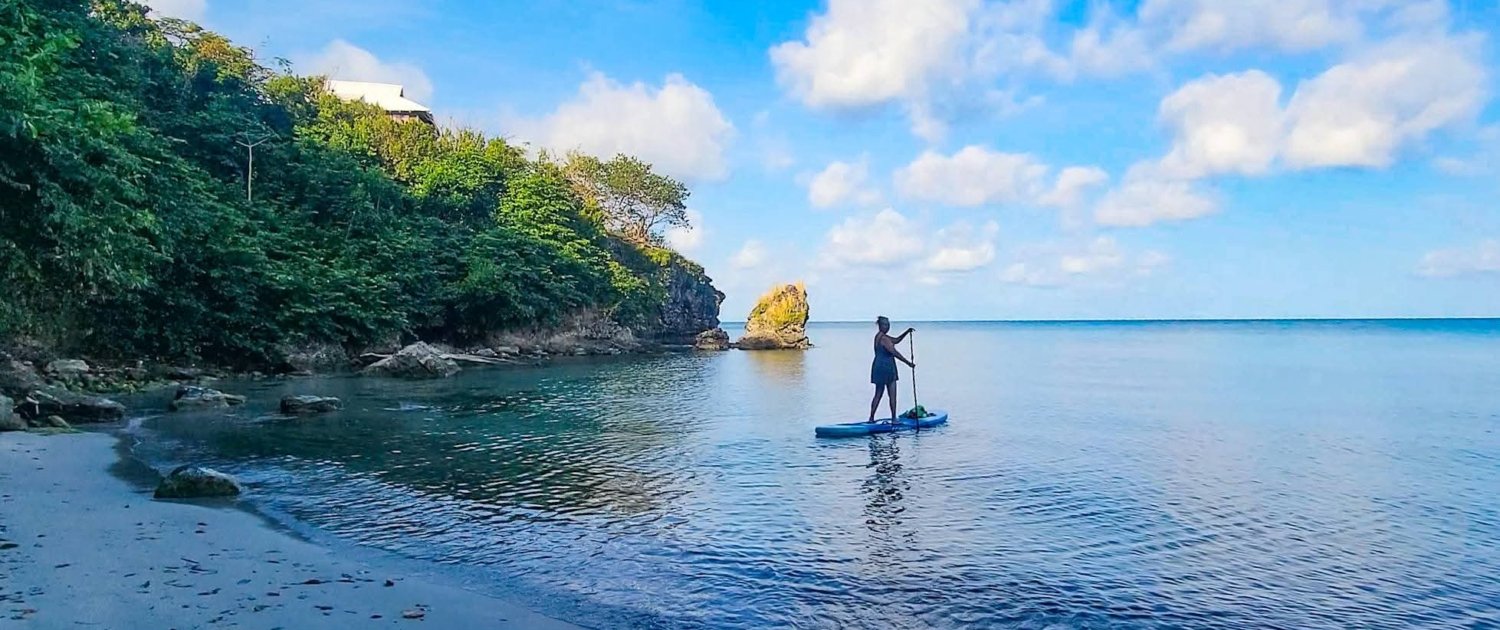
When you spend most of your life outdoors — swimming, paddling, walking, moving — you can’t outsource resilience.
You have to build it.
Over time, you realize:
Most problems are solvable
Very few situations are true emergencies
You don’t need perfect conditions to move forward
You are far more capable than you once believed
Travel trains you to duck and weave instead of freeze.
These skills don’t just apply abroad.
They apply to business, relationships, health, and major life transitions.
You stop needing control.
You start trusting your ability to adapt.
Why I Choose a Life in Summer
I don’t navigate these transitions because I enjoy chaos.
I do it because I value something very specific:
A life lived in the open.
Sun on skin.
Salt air.
Movement instead of confinement.
Nature as a daily constant — not a weekend reward.
What I’m really choosing — again and again — is summer as a way of life.
Not vacation summer.
Not luxury summer.
But the kind where your days are shaped by light, weather, tides, and your own energy instead of schedules and walls.
There are fewer buffers in that life.
And because of that, you become one.
The Point of It All
Take Me to Summer was never about escaping life.
It’s about designing one that feels expansive, embodied, and alive.
A life where:
You spend more time outside than inside
Nature sets the rhythm
You know how to care for yourself
You trust your ability to adapt
You don’t need permission to live well
Resilience is the price of entry.
Summer is the reward.
And once you learn how to live this way — once you build the skills to support it — summer stops being a season.
It becomes a standard.